
The Psychology Behind Self-Doubt and Imposter Syndrome
You just landed a promotion, finished a degree, or received glowing feedback on a project you poured yourself into. And yet, instead of pride, you feel a nagging sense that you don't really deserve it, that somehow, someone made a mistake, and it's only a matter of time before everyone finds out. If this sounds familiar, you're not alone, and you're not "broken." What you're experiencing has a name, a psychological history, and most importantly, a path forward.
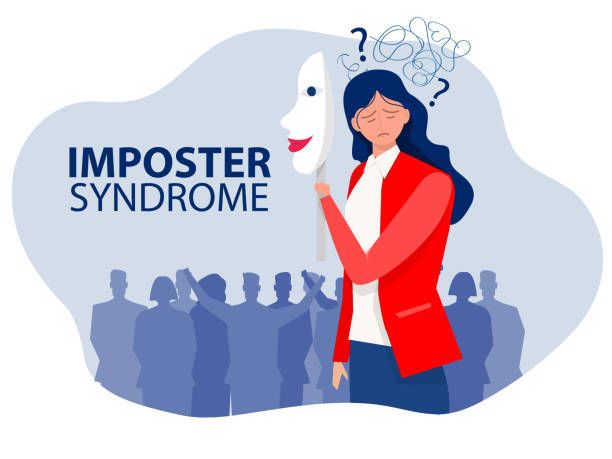
What Self-Doubt and Imposter Syndrome Actually Are
Imposter syndrome, sometimes called the impostor phenomenon, was first described by psychologists Pauline Clance and Suzanne Imes in 1978. According to the APA Dictionary of Psychology, it refers to a persistent belief that one's accomplishments are the result of luck, timing, or deception rather than genuine ability, along with an underlying fear of being "found out." Self-doubt is closely related but broader because it's the ongoing questioning of one's own competence, judgment, or worth, even in the face of clear evidence to the contrary.
It's worth noting that imposter syndrome isn't a formal clinical diagnosis. It doesn't appear in the DSM-5. But that doesn't make it any less real or any less impactful. Research shows it shows up across nearly every field and background, from students to physicians to executives, and it's associated with genuine psychological distress. A 2025 cross-sectional study of university students found that more than half of participants met criteria for imposter syndrome, and higher imposter scores were meaningfully correlated with both depression and anxiety symptoms.
Why Our Brains Do This
Self-doubt doesn't come out of nowhere. It's often rooted in patterns of thinking that psychologists call cognitive distortions, which are habitual, automatic ways of interpreting situations that skew negative and rarely match reality. Harvard Health describes several of these patterns clearly, including black-and-white thinking, mental filtering (fixating only on what went wrong), and "comparison," where we measure our behind-the-scenes struggles against someone else's highlight reel. When these thought patterns become chronic, they can quietly shape how we see our own competence.

There's also a well-documented tendency called negativity bias, which is when our brains are wired to give more weight to criticism, failure, and threat than to praise or success. This made evolutionary sense for our ancestors (better to overreact to danger than underreact), but in modern life it means one critical comment can outweigh ten compliments in our memory. Add to this what Harvard Health calls automatic negative thoughts, or ANTs, quick, distorted interpretations that pop up especially when we're anxious or stressed, and it becomes easier to understand why competent, capable people can still feel like frauds.
It's Not Just Personal; Context Matters Too
For a long time, imposter syndrome was framed as an individual flaw to be fixed, as if the problem lived entirely inside a person's head. More recent psychological research pushes back on that idea. A widely discussed perspectives piece published through the American Psychological Association argues that imposter feelings, particularly among people from marginalized or underrepresented groups, often arise from real structural and environmental factors, like being one of very few people who look like you in a room, or navigating spaces that weren't originally designed with you in mind. In other words, self-doubt isn't always a distortion of reality; sometimes it's a reasonable response to an environment that hasn't fully made room for you. This reframing matters because it shifts the conversation away from "what's wrong with me" towards "what's happening around me and how do I respond to it."
As Kevin Cokley, PhD, a psychology professor who studies the impostor phenomenon, explains in an interview with the American Psychological Association, these feelings often intensify during major transitions, like starting a new job, entering a new field, or reaching a level of achievement that feels unfamiliar. The discomfort of being new or different can easily get misread by the brain as evidence of inadequacy rather than simply evidence of growth.
Perfectionism's Role
Self-doubt and imposter feelings also tend to travel closely with perfectionism. When your sense of worth is tied to flawless performance, any mistake, even a small, normal one, can feel like proof that you don't belong. This creates a loop: high standards lead to inevitable slip-ups, slip-ups trigger self-criticism, and self-criticism reinforces the belief that you have to work twice as hard to "prove" yourself, which only deepens the exhaustion and doubt over time.

Breaking the Cycle
The good news is that none of this is fixed or permanent. Because self-doubt is built through learned thought patterns, it can also be unlearned. This typically involves:
Naming the pattern. Simply recognizing "this is a cognitive distortion" or "this is my imposter voice talking" creates distance between you and the thought, making it easier to question rather than automatically believe.
Looking for evidence. Actively examining what's actually true, your track record, feedback from others, past challenges you've navigated, rather than relying on how you feel in the moment.
Separating feelings from facts. Feeling like a fraud is not the same as being one. Emotions are real, but they aren't always accurate reporters of reality.
Considering the environment. Asking whether a workplace or academic setting is genuinely supportive and inclusive, rather than assuming all discomfort is a personal failing.
How Dr. Fallon's Practice Can Help
If self-doubt or imposter feelings have been showing up in your work, relationships, or sense of self, you don't have to untangle it alone. At Dr. Fallon's Practice, our licensed clinicians offer individualized, culturally sensitive virtual therapy across New York State for concerns including self-doubt, perfectionism, low self-esteem, anxiety, and life transitions, the very patterns and pressures that often fuel imposter feelings. Whether you're navigating a new role, a competitive field, or simply a persistent inner critic, our therapists can help you understand where these patterns come from and build genuine, lasting confidence rather than a fragile version of it. Get started today and find a therapist who's the right fit for you.


Comments